El secreto de las empanadas de Argentina Polo Day / The secret of Argentina Polo Day’s empanadas

14 may

El secreto de las empanadas de Argentina Polo Day

Si se hiciera una encuesta estrictamente gastronómica para determinar cuál es el plato típico de Argentina, no sería extraño observar que gran parte de las respuestas señalan al asado. Y me atrevería a decir que de cerca le siguen las empanadas. Porque a pesar de no ser tan reconocidas internacionalmente, ocupan un lugar importante en la gastronomía argentina y en el colectivo popular por su tradición y su historia. De hecho existen tantas maneras de hacer empanadas como familias. Cada una tiene su receta, su ingrediente secreto o su toque especial. Y las que se preparan en Argentina Polo Day no son la excepción. Incluso todos los que alguna vez nos visitaron quedaron sorprendidos por lo sabrosas que son y con la incertidumbre de saber qué, cómo,  o quién las hace así de ricas. Si vos sos uno de ellos, te invitamos a leer este artículo en el cual vas a descubrir el origen de esta comida y lo que nosotros llamamos “el secreto de Rubén”.

A pesar de lo arraigada que se encuentra en nuestra tradición, es conveniente aclarar que su origen se remonta varios siglos antes de Cristo en territorio de la antigua Persia (lo que hoy sería Irán). Los árabes solían prepararlas con carne de cordero y trigo y tenían una forma similar a lo que hoy conocemos como empanadas, sólo que en aquella época se llamaban “esfiha” y “fatay”. Se cree que luego fueron introducidas a la cultura española a través de los invasores moros que se asentaron principalmente en el sur de España, en Granada principalmente. Es en este momento en dónde nace la palabra “empanada”. Su etimología indica que proviene del castellano empanar que, a su vez, significa “encerrar algo en masa o pan para luego cocerlo en el horno”. Siglos más tarde, a través del desembarco ibérico en América con la llegada de Cristóbal Colón en 1492, cultura, costumbres y comidas típicas españolas invaden todo el continente.

Pero sin lugar a dudas fue en Argentina donde esta comida  adquiere una personalidad propia tornándose incluso en un símbolo estrictamente regional. Tanto es así que cada provincia, cada restaurante, cada familia y mismo, cada persona, tiene una manera especial de prepararlas. Distintas maneras de cocción o de ingredientes son algunas de las claves para entender estas diferencias. En Argentina Polo Day, Rubén –el responsable de hacer unas empanadas riquísimas, comentario frecuente entre los visitantes- tiene un secreto no develado para cocinarlas, hasta hoy. Si después de haber disfrutado de un día de polo al aire libre, te fuiste con la intriga de cómo es posible que sean tan sabrosas, a continuación te explicamos paso a paso la receta. ¡Toma nota!

1)     la cebolla con grasa de vaca hasta que se cristalice (aprox. 2 min).

2)    Sal y pimienta a gusto.

3)    Agregar morrón picado y mezclar todo.

4)    Agregar carne picada.

5)    Por cada kilo de carne picada, agregar 2kg de cebolla picada cocida.

6)    Sumar una hoja de laurel y ají molido.

7)    Esperar hasta que la carne se cocine. Una vez cocida, dejar asentar y enfriar con todos los condimentos.

8)    Revolver recién cuando la preparación esté fría.

9)    Colocar la preparación dentro de una tapa de empanada y agregar: huevo duro picado, papa hervida y cortada en cubitos y cebolla de verdeo (previamente rehogada).

10) Cerrar la tapa de empanada.

11)  Cocinar al horno, frita en la sartén o…. ¡en la parrilla!

Sí, la parrilla es una opción para cocinar las empanadas y es el gran secreto de Rubén para que sean así de sabrosas. Esto no hace más que confirmar que existen muchas de maneras de realizar esta comida tan tradicional de nuestro país. Ahora sólo resta que lo intentes y te animes a prepararlas de la forma que más te guste.

empas2

The secret of Argentina Polo Day´s empanadas

If you decide to make a survey on the most traditional and popular dishes of Argentina, it wouldn`t be strange to observe that barbecue, from now on asado, occupies the first place.  And for sure the empanadas come next. Although they are not so recognized internationally they occupy an important place in Argentina’s gastronomy and in the popular sociology for its tradition and history. In fact, there are as many ways to prepare empanadas as families. Each and everyone has its recipe, its secret ingredient or its special touch. And those prepare at Argentina Polo Day are not the exception. Almost everyone who visited us were surprised by how tasty they are and always left with the uncertainty about how and who prepared them so tasty. If you are one of those, we invite you to read this article where you will discover the origins of this food and what we known as “Ruben´s secret”.

In spite of how rooted this food is in our tradition, it is useful to say that its origin goes back many centuries AC in Persian territory (nowadays Iran). Arabs used to prepare them with lamb meat and wheat and had a similar shape to what we now know as empanadas, only that they were named as “esfiha” and “fatay”. It is believed that were introduced in Spanish culture through the moors, who settled in the south territory in Spain, especially in Granada. It is at this moment where the word empanada acquires significance, since its ethymology derives from the verb empanar which means “put any food in a dough or bread in order to cook it in the oven”. Centuries later, through the Iberian landing in America with Cristobal Colon in 1492, culture, costumes and traditional dishes invade the whole American continent.

It was certainly in Argentina where this food acquires “personality” becoming itself a symbol strictly national. In fact each province, each restaurant, each family and, even, each person, has a special way of preparing them. Varieties of mixing ingredients or means for cooking them are some variables to understand those differences. In Argentina Polo Day, for example, Ruben –the one responsible for preparing the most delicious empanadas, a frequent comment among visitors-, has an unveil secret, until now. If you left Argentina Polo Day without knowing how is it possible to prepare such tasty empanadas, we tell you step by step the complete recipe. Pay attention and take some notes!

1)    Fry gently some onions in beef fat until they crystallize (2 min aprox)

2)    Salt and pepper.

3)    Chopp bell pepper; add it to the preparation and mix.

4)    Add mince meat.

5)    For each kilogram of mince meat, add 2kg of cooked and chopp onion.

6)    Add a leaf of laurel and powdered pepper

7)    Wait until the mince meat is cooked. Once this is done, let the whole preparation cool down and then stir.

8)    Put all the preparation inside the dough and add: cooked eggs (all chopped), stew potatoes (cut in dices) and scallion (previously fried).

9)    Close the dough.

10) Fry it in the frying pan; cook it in the oven or….¡in the grill!

As you see, it is confirmed that there are many ways to prepare this dish which is so traditional in our country. Now that you have the recipe and the secrets, it´s time for you to try and prepare them in the way you prefer it the most!

empas

Doma: el camino hacia un caballo de polo / Tame: the path towards becoming a polo pony.

6 may

Cada vez que vemos un partido de polo, quizás nos preguntamos cómo fue el proceso a través del cual un caballo silvestre, sin contacto alguno con este deporte, es capaz no sólo de acatar las órdenes de los jugadores  sino también de tener un excelente desempeño en el campo de  polo. Para eso, y por si alguna vez tuvieron esta inquietud, en el artículo de hoy vamos a hablar un poco sobre la doma.

En términos generales, se entiende por doma el período en el cual un caballo es amansado, adiestrado y entrenado para un determinado fin, que en este caso es el polo. Cabe destacar que este período de tiempo no es determinado,  ya que depende de varias variables como el carácter del caballo, su genética y el fin para el cual es domado, entre otras. Especialistas en el tema explican que un caballo para Endurance requiere más adiestramiento que uno de Carrera pero menos que uno de Polo, por ejemplo. Y además señalan que el caballo destinado a ser un caballo de polo, es un caballo que tiene mucha sangre y carácter, motivo por el cual los domadores deben tener cuidado al momento de adiestrarlo; en especial porque el objetivo es que luego sean animales mansos, atletas, dóciles, fuertes y resistentes. De esta manera, queda claro que la doma está lejos de ser una actividad estructurada ya que depende no sólo del “estilo” que tenga el domador sino de la actitud y la predisposición del animal.

Ahora bien, a pesar de estas diferencias, se puede afirmar que las técnicas han variado con el transcurso de los años en gran parte debido a que se han modificado las necesidades, consecuencia a su vez del profesionalismo que comenzaron a exigirles a los caballos.  Por esta razón, es posible decir que a grandes rasgos se ha evolucionado de una “doma tradicional” a una “moderna o racional”.  En este tipo de doma se busca el amansamiento y aprendizaje del animal sin recurrir a la fuerza. Esto ocurre porque se prioriza trabajar con el conocimiento de la sociología del caballo. Por ejemplo, entender que el caballo está acostumbrado a vivir en manadas y se pone muy nervioso al estar solo, es parte de la doma racional. Al igual que comprender que el caballo necesita un líder natural y que de no demostrarle que el líder es el domador, ese lugar lo ocupará el animal naturalmente. La evolución hacia este tipo de doma responde también a que se obtienen caballos más dóciles y flexibles, dos características importantes para caballos que serán utilizados para deportes.

Además de trabajar con la sociología del animal, los domadores así mismo tienen que hacer especial hincapié en que las señales que les hacen (ya sean con las riendas o con las piernas) sean asimiladas por el caballo de manera tal que entienda a la perfección el mensaje que su jinete le quiere transmitir. La manera más común de lograr esta asimilación es a través del sistema de “premios y castigos” en tanto motivan al animal a tener o no determinados comportamientos. Entonces, cada vez que el caballo haga lo que el domador le pide se le darán golosinas o se lo premiará con un descanso a fin de demostrarle que hizo lo correcto. Para corregir actitudes no deseadas, los domadores recurren a los “castigos” evitando por completo que sean violentos o de carácter emocional. Cambiar el tono de voz o el lenguaje corporal, son algunas de las opciones más utilizadas. La instrumentación de este sistema de “premios y castigos” permite que luego el caballo comprenda que un aumento de la presión de las piernas del jinete sobre sus costados (siempre a la altura de la cincha) lo asimile como una indicación para moverse hacia adelante.

A esta altura, seguramente muchos lectores se estarán preguntando si todos los caballos domados sirven para polo y, de no ser así, como es que definen si lo será. Para ello, y a modo de conclusión, es necesario hacer hincapié en una última etapa que muchos denominan la etapa de los “pilotos”, también referidos como aquellos que “terminan los caballos”. Generalmente estos “pilotos” son los jugadores, livianos, de buen taqueo, que prueban los caballos y les van dando horas, kilómetros.  Una vez finalizada esta etapa, el siguiente paso es el entrenamiento del caballo para lograr su máximo rendimiento dentro del campo de juego.

Luego de leer este artículo, el lector debería ser capaz de recordar  tres aspectos importantes en relación a la doma. A saber: que no es una actividad que pueda desarrollarse en un período de tiempo determinado –ya que depende de diferentes variables-, que la evolución hacia un tipo de doma más racional tiene como resultado caballos que son más flexibles y más funcionales a los deportes (en nuestro caso, el polo) y, por último, que el sistema de “premios y castigos” es absolutamente necesario para alcanzar el objetivo final: un caballo amansado y adiestrado.

Tame: the path towards becoming a polo pony.

Every time we assist a polo match, maybe we ask ourselves how was the process by which a wild horse turns out into a flexible animal capable of abiding and following the player´s orders and having, simultaneously, a perfect performance at the polo field.  If you ever had these doubts, we invite you to read this article dedicated to taming horses.
Generally speaking, taming is referred as the period of time during which a horse is trained for a particular purpose, in this case for polo. It is important to highlight that this period is not definite since it depends on different variables such as the horse´s character, its genetics and the purpose of the tame, among others.  Specialists on the subject explain that a horse for Endurance requires much more training than one use for Races but less than one destined to play Polo. Furthermore they point out that a horse intended to be a polo pony has a strong character in comparison to others, reason why the tamer must be very careful during training. Especially because the final objective is to transform a wild horse into one calm, athletic, docile, strong and resistant. So the first important conclusion the reader must retain is that it doesn´t exist a unique way to tame an animal, since it depends both on the tamer and on the horse´s attitude.
Despite these inherent differences, in general terms it is possible to affirm that techniques have changed over the years in response to a change in needs, result in turn of the professionalism that began to be demanded on horses.  This is usually referred as an evolution from a traditional form of tame to a modern or rational one, where force is forbidden during training. In fact this occurs because the priority is to work with the animal´s sociology and apply that knowledge during taming. For example, understanding that they naturally live in herds and they get very nervous when being alone, is part of the rational tame. As well as realizing that a horse needs a natural leader and, if the tamer doesn´t demonstrate he is the one, the animal will occupy that place instinctively. The evolution towards this type of tame is also a consequence of the results obtained at the end of the process since horses end up being more docile and flexible, two important characteristics considering they will be used for sports.
Besides working with the animal´s sociology, tamers must be sure that the signs done to horses are assimilated by them in such a way that corresponds exactly to the rider`s message. The most common way to achieve this is through the system known as “rewards and punishments” since it motivates or inhibits different behaviors. This is why every time the horse does what he is asked to do, it will be rewarded with food or with a simple rest in order to demonstrate that the recent attitude is the correct. On the contrary, to correct undesirable behaviors tamers employ punishments; of course avoiding them being violent or emotional.  Changing the voice or the corporal language, are the most frequent
ones.  Above all, the implementation of this system allows that horses assimilate specific messages and then act in consequence.
By now, readers might be asking themselves if all tamed horses are then use for polo and, if not, how is the process by which they decide this.  To understand this point it is necessary to highlight the last stage which is generally known as the stage of “pilots”, also referred as those who “end the horses”.  Usually these “pilots” are the players who test the horses.  Once this period ends, the next step is the training of the animal in order to achieve its maximum and higher performance in the polo field.
After reading this article, the reader should be able to recall three relevant arguments in relation to taming: that it is not an activity that takes place in a definite period of time -given that it depends of different variables-, the evolution towards a most rational way of taming produces horses more flexible and more functional to sports and that the system of “rewards and punishments” is absolutely necessary to accomplish the final objective:  a trained polo pony.

Sección Mano a Mano: Polo Visionary – Rubén Jabib / Face to Face: Polo Visionary – Rubén Jabib

20 mar

En esta tercera entrega de nuestra sección Mano a Mano entrevistamos a Rubén Jabib. Dedicado hace varios años al polo y fundador de Argentina Polo Day, nos cuenta un poco sobre sus inicios en este deporte y sobre Argentina Polo Day, líder en el mercado turístico y referente en el polo amateur por ser la única donde se puede ver y aprender polo los 365 días del año.

1) ¿Cuándo y cómo comenzó tu pasión por los caballos y el polo?

RJ: Desde muy chico. Mi mamá tenía un campo en Carlos Tejedor y pasaba los tres meses de vacaciones ahí. Tanto tiempo en el campo me “obligó”, por decirlo de alguna manera, a encontrar formas alternativas de diversión a las que uno puede encontrar en la ciudad. Así fue como un día me subí a un caballo y de a poco aprendí a cabalgar. De hecho, es el día de hoy que estar rodeado de caballos es parte de mi trabajo. En cuanto al polo, también comencé de chico y por esa necesidad de innovar. Mi primo hizo una pequeña cancha y como contábamos con un solo taco, comenzamos a inventar tacos con diferentes materiales sólo para poder pegarle a la pelota. Después estuve alejado algunos años del polo, hasta que un día me animé a intentarlo más profesionalmente. Lo bueno es que la base ya la tenía, ya sabía cómo anclar bien el caballo.  

2) ¿Crees que un jugador de polo se hace o se nace?

RJ: Considero que un jugador de polo se hace. Desde ya que hay personas que naturalmente nacen con virtudes que otras carecen, pero estoy convencido que con dedicación, esfuerzo y práctica se puede llegar a ser un jugador de polo con un nivel profesional.

3) Si alguien que nos está leyendo está dubitativo respecto de si comenzar o no a jugar polo, ¿qué le dirías?

RJ: Lo primero: que nunca es tarde. En mi caso personal yo me volví a reencontrar con el polo muchos años después y hoy en día me dedico exclusivamente a esto. Dejame comentarle al lector que mencionas en la pregunta que en Argentina Polo Day, por ejemplo, observamos el desempeño de cada una de las personas que se acercan por primera vez y determinamos por dónde deberían comenzar. Generalmente sugerimos que los primeros meses comiencen por cabalgar, por fortalecer el agarre en el caballo y la equitación. Diría que este paso es fundamental y debe ser previo a la práctica de cualquier técnica.  

4) ¿Cuál es la misión de Argentina Polo Day?

RJ: Hoy en día Argentina Polo Day está muy bien posicionada en lo que respecta al mercado turístico. Recibimos visitantes de distintas partes del mundo y a menudo con altos niveles de polo, que disfrutan de un día de campo fuera de lo común. Ahora bien, el objetivo puntual de Argentina Polo Day en los próximos años es crecer y asentarse como una organización de polo. Lograr que se consolide como un club que tenga la posibilidad de competir en las ligas mayores.

5) ¿Por qué se diferencia del resto de las ofertas relacionadas al polo?

RJ: Nos diferenciamos en primer lugar porque en Argentina Polo Day no hay temporadas de polo. Nosotros jugamos polo todos los días, los 365 días del año, sin importar si hace frío, calor o si llueve. Y aunque a simple vista parezca algo trivial, realmente hace la diferencia para todos aquellos que son aficionados de este deporte. Y te diría que la segunda razón es porque nos amoldamos a las posibilidades (económicas) de las personas. Somos una oferta muy accesible y muy profesional al mismo tiempo, y esta es una característica que nos hace únicos en el mercado.

Face to Face: Polo Visionary – Rubén Jabib.-

In this third edition of our section Face to Face, we interviewed Rubén Jabib. Dedicated to polo for many years and founder of Argentina Polo Day, he tells us about his first steps in this sport and explains us why APD is leader in the tourist market and what makes it a reference in amateur polo.

 1)  When and how did your passion for horses and polo start?

RJ: Since I was very young. My mother had a polo field in Carlos Tejedor and I spent all my vacations there (three months). That “forced” me to be more creative and to find different ways forms entertainment than is currently of offer in the city. Riding a horse, having no idea how to, it’s a clear example of that. In relation to polo, I also started when I was young. In the polo field that I previously mentioned, my cousin made a small polo field. Since we only had one polo mallet, we began to make more of them with different materials in order to hit the ball and actually play! Although I was very connected to polo as a child, I spent some years away from everything connected to it. Eventually I decided to start with more professional training. 

2) Polo players are born or made?

RJ: I believe polo players are made. Of course there are many people that are naturally born with some virtues that others don´t have. But I´m convinced that with dedication, effort and practice it is possible to become a professional polo player.  

3) If someone is reading this article right now and has doubts whether to start playing polo or not, what would you say to them?

RJ: First: it´s never too late. In my personal experience, I rediscovered polo after many years and nowadays I spend most of time training and doing things that are related to it. Let me tell you that reader in Argentina Polo Day, for example, we monitor each individual case. That is to say that if a person comes to Argentina Polo Day for the first time, we see the level of experience that person has and then we determine where they should begin. During the first few months we generally suggest doing types of exercises that improve peoples’ ability to ride horses, so they can acquire confidence. I would say that this step is fundamental and should be prior to any other practice of polo techniques.

4) What is Argentina´s Polo Day objective?

RJ: Nowadays Argentina Polo Day is well positioned in the tourism market. We receive many clients from different parts of the world and many of them have fairly high polo playing levels. Nevertheless the objective of Argentina Polo Day over the next few years is to grow and to reaffirm itself as a leading polo organization, a club that can consolidate itself and compete in the major polo leagues.  

5) Why is it different from other polo facilities being offered?

RJ: Firstly we are different because in Argentina Polo Day we have no seasons. We play polo every day of the year no matter if it is winter, summer or if it rains. Although this seems trivial, it makes a difference for those who are fans of this sport. And I would say that the second reason is because we satisfy the financial concerns of the people who are interested. We are economically accessible and very professional, a characteristic that makes us unique in the polo market. 

Sección Mano a Mano: Entrenamiento de Polo / Face to Face: Polo training

5 mar

Sección mano a mano: Danilo Pellegrino, preparador físico

En la última entrega de nuestra sección Mano a Mano, entrevistamos a tres polistas amateurs para que nos contaran un poco su pasión por el polo. Esta vez entrevistamos a Danilo, un preparador físico que hace 32 años que se dedica a la docencia para lograr el máximo rendimiento de los deportistas. Danilo estudió profesorado de educación física, es nadador de alto rendimiento y durante muchos años corrió triatlones y maratones. Y como verán en la siguiente entrevista, su especialidad es la resistencia física, algo que define como fundamental en todo entrenamiento de polo.

1)    En un óptimo, ¿Cuántas veces a la semana se debería entrenar un jugador de polo?

DP: En realidad depende mucho del nivel del polista, ya que uno profesional entrenará  con más exigencias que uno amateur y seguramente lo haga más seguido. Pero en líneas generales diría que, un buen entrenamiento, dónde se complemente técnicas y preparación física, contemplaría 3 veces por semana.

2)      ¿Un polista puede realizarlo por sí mismo o precisa de un preparador físico? ¿Por qué?

DP: Inicialmente, siempre es mejor contar con un preparador que pueda guiar al polista en los ejercicios a realizar y estar atento en corregir los errores, o malas posturas, que puedan surgir durante el entrenamiento. Una vez que adquirió el hábito, puede entrenar por su cuenta si así lo desea. Si lo trasladamos a la vida cotidiana, diríamos que uno puede cocinar sin la ayuda de un chef, de hecho la mayoría lo hace todos los días, pero el resultado seguramente no sea el mismo.

3)      ¿En qué consta la preparación física? ¿Qué ejercicios predominan?

DP: A mi criterio, requiere de una formación física básica pero con un fuerte predominio de fuerza y resistencia, que es lo que más se necesita. Al ser un deporte dónde se precisa mucha fuerza motriz (recordemos que el polista permanece sobre el caballo, en equilibrio y con sus piernas agarradas un tiempo considerado) éstos dos conceptos son importantes. En cuanto a los ejercicios a realizar, primero hay que aclarar que marcar como fundamental un solo ejercicio es un error conceptual; un circuito de peso del propio cuerpo es lo ideal. Flexiones de brazos, fuerza de tríceps y ejercicios localizados en cuádriceps, abductores y abdomen  son algunos de los que no deberían faltar.

4)      ¿Cuáles son las partes del cuerpo que más se exigen en el polo?

DP: La respuesta a esta pregunta está implícita en la pregunta anterior, porque las partes que más se exigen son las que deben entrenarse con mayor dedicación. Diría que por la postura que requiere este deporte y los movimientos, las más exigidas serían la cintura, la lumbar, los abdominales, el glúteo medio y posterior y los abductores.

5)      ¿Cómo es la recuperación después de un entrenamiento? ¿Hay alguna recomendación respecto de la alimentación?

DP: Es fundamental el estiramiento y la flexibilidad, en especial la de toda la columna cada vez que un polista termina un entrenamiento o un partido.  La alimentación, como en todo deporte, tiene que ser una alimentación sana con el justo equilibrio de proteínas y carbohidratos.

Face to face: Danilo Pellegrino, trainer

In the previous article of this section, we interviewed three amateur polo players who told us about their passion for this sport. This time we talked with Danilo, a trainer that for 32 years has been teaching what he knows about training. Danilo studied physical education, he is a professional swimmer and for many years he ran triathlons and marathons. And as you will see in the following interview, his specialty is the physical resistance, something he defines as fundamental in polo training.

1)      Ideally, how many times a week a player must train?

DP: It really depends on the level and techniques the player has, since a professional one will have more demands on its training than an amateur and he will probably do it more frequently. But generally speaking I would say that an optimum, combining techniques and physical training, is three times a week.

2)      Is it necessary for the player to do it with a trainer or he can train by itself? Why?

DP:  At the begging I believe it’s necessary to do it with a trainer since he can guide the player and show him the errors that might occur when exercising. Once the player acquires the routine and knows exactly how to do it, he can train by itself. If we compare this with a simple situation in life, it is possible to say that anyone can cook without a chef telling what ingredients to use, but for sure that the meal will not taste the same.

3)      What can you tell us about polo training? Which exercises predominate?

DP: In my point of view, it requires a basic physical training but with a strong predominance of strength and resistance, because it’s what players need more.  Since it is a sport that requires prime mover (remember that the player rides a horse, trying to maintain its equilibrium with its legs for a long time) this two concepts are fundamental. In relation to exercises, I must recognize that talking of the most important enhances a conceptual error; a circuit it’s always the ideal.  Push-ups, triceps and specific exercises for quadriceps, abductor and abdomen are some of them that must be present.  

4)      Which are the parts of the body that more are demanded in polo?

DP: The answer to this question it´s implicit in the previous one, because the parts that are more demanded are the ones that must be trained with more dedication. I would say that because of the postures and movements that polo requires these are: the waist, the lumbar, the abs and the inner part of the leg.

5)      What can you tell us about the post-training? Do you have any recommendation on how to relax? And what about alimentation? Is there any diet that a player must follow?

DP: It is important that the player acquires the routine of stretching, especially its column, every time a training or a match is finished. I believe no specific diet is necessary, but as in any sport he must follow a healthy diet which includes the perfect equilibrium of proteins and carbohydrates.

Sección Mano a Mano: Amantes del polo / Face to Face: Polo Players

3 feb

Todos tenemos una pasión. Algo a lo que le dedicamos tiempo y nos genera mucha satisfacción. Para ellos es el polo.  En esta nueva sección del blog, a la que llamamos “Mano a Mano” entrevistamos a Julio Cueto Rua, Gunther Bellman y Stéphane Buton para que nos cuenten por qué eligieron este deporte y qué les apasiona del mismo. Los tres son polistas amateurs de El Camino Polo Club, un campo de 20 hectáreas administrado por Argentina Polo Day que cuenta con dos canchas de polo, alojamiento y piscina para disfrutar de una jornada deportiva diferente.

Te invitamos a que conozcas un poco sobre su vida y su relación con el polo en la siguiente entrevista.

1. ¿Cómo te iniciaste en el polo?

JCR: Fue la combinación de dos circunstancias: me gusta mucho montar y desde siempre admiré la habilidad de los grandes polistas. No obstante, pasaron muchos años hasta que me decidí a practicarlo. Obviamente no era mi intención “jugar” al polo y competir, sólo deseaba pegarle a la bocha y divertirme en alguna práctica. Entonces comencé a buscar un caballo de polo y por una de esas casualidades del destino aparecí un día en Argentina Polo Day y conocí a quién hoy considero un amigo y quien me convenció que lo hiciera: Rubén.
GB: Fue hace doce años después de ver y acompañar a varios partidos a un amigo de alto handicap.
SB: Fue totalmente de casualidad.  Mi hija quería andar a caballo,  la acompañé  a tomar unas clases y su instructor me propuso sumarme. Después de algunas semanas me propuso otros desafíos como saltar unas barras pero como no estaba equipado para hacerlo, comenzamos a taquear y me gustó enseguida. A comienzos de 2012, luego de algunos años inactivo, conocí a Rubén; me convencieron sus propuestas y sus ideas, y desde entonces entreno para convertirme en un “jugador de polo”.

2. ¿Por qué lo elegiste? ¿Qué ofrece el polo a diferencia de otro deporte?

JCR: Como comenté anteriormente, siempre admiré la habilidad de los grandes polistas y obviamente la destreza de sus caballos. Me deleitaba viéndolos maniobrar montados en un ser “vivo” al que dominaban en las mil cabriolas, contorsiones y piruetas del juego.
GB: Desde que tenia diez años de edad que le insistía a mis padres para practicarlo. No se bien por qué lo elegí, pero si sé que me gusta desde que tengo uso de razón. El polo es un deporte de “contacto” en todo sentido: contacto con los caballos, los amigos, los peticeros, con los jugadores en la cancha, con la naturaleza. Creo que eso es lo que más me gusta de éste deporte.
SB: Primero por el contacto con los caballos. Soy francés y en Francia no es común poder estar cerca de ellos. Recuerdo cuando tenía 9 o 10 años que pedí un caballo para navidad…y tuve una linda bicicleta como regalo. Segundo porque es un deporte que le permite estar al jinete súper activo. Y tercero porque es un deporte en equipo.

3. ¿Cuántas veces a la semana entrenas? ¿De qué manera perfeccionas tus técnicas?

JCR: Lamentablemente mis obligaciones no me permiten concurrir a Argentina Polo Day muy seguido; a veces pasa mucho tiempo sin que pueda practicar. Pero es mi propósito este año dedicarle como mínimo un día por semana, y en lo posible dos días. En cuanto a la técnica, en el polo, como en casi todos los deportes, se aprende con la práctica. Podrán explicarte cómo pegarle a la bocha en una u otra posición, pero es la práctica la que en definitiva cuenta. En mi caso, recién estoy dando mis primeros pasos y con un gran entusiasmo.
GB: Le dedico cinco prácticas semanales. De hecho, el año pasado llegamos a jugar ochenta  días seguidos, más que los polistas profesionales. En lo que respecta a la técnica, mi manera de perfeccionarlas es taqueando con el profesor.
SB: Trato de entrenar dos o tres veces por semana y por lo general jugamos 4 chukkers de 10 minutos. En cuanto a las técnicas, la mejor manera de perfeccionarlas es haciéndolo varias veces. Las prácticas son una gran escuela, en especial porque compartís el campo de juego con jugadores que tienen 10, 15,20 años de polo que te marcan tus errores y te los corrigen. Eso es un gran estímulo. Aprendo mucho sobre las tácticas, como posicionarme, como evitar los errores, cuando frenar o acelerar. Cometo muchas equivocaciones y me enojo mucho conmigo mismo, pero con sólo un año de práctica no puedo compararme con jugadores que han competido en muchos torneos.

  • 4.¿Cuál es tu opinión sobre Argentina Polo Day (APD)? ¿Qué aporta al mundo del polo?

JCR: Argentina Polo Day es un ambiente propicio para el aprendizaje de este extraordinario deporte. Me siento cómodo, acompañado y rodeado de gente afable y cordial. Rubén y Celia son grandes personas que con empeño brindan su tiempo, esfuerzo y talento para superarse día a día y agrandar y mejorar la infraestructura del club.
GB: Argentina Polo Day  es un producto novedoso para el turismo, que se mantiene en el tiempo dando un servicio de alta calidad. Es un gran aporte al mundo del polo ya que permite que personas de diferentes países y culturas conozcan más en profundidad de que se trata éste deporte.
SB: Personalmente, creo que sin Argentina Polo Day estaría pagando una fortuna para alquilar los caballos. Pero por sobre todo, le permite a cualquier persona vivir el polo de una manera que posiblemente nunca hubieran pensado, en especial por la imagen elitista y cerrada que se tiene de éste deporte en el imaginario colectivo. Acerca a las personas al polo y hace que lo disfruten y se apasionen. Debo mencionar también El Camino Polo Club (dónde entreno); un lugar en dónde no sólo encontré jugadores dispuestos a enseñarme a montar y a jugar, sino que también personas que saben asesorarme en cada aspecto: desde el entrenamiento hasta qué equipo es el adecuado para comprar.

5. ¿Cuál es tu anécdota favorita en relación a éste deporte? 

JCR: En la primera práctica a la que Rubén me había invitado para seguir el pelotón (no para jugar), en forma inesperada tuve la bocha a pocos metros y no pude resistir el impulso de intentar pegarle -a pesar de que no había sido invitado a la práctica para eso-. El problema es que cuando le pegué a la bocha, terminé sentado en la cancha porque había perdido la estabilidad.

GB: Mi anécdota favorita es jugar al polo bajo la lluvia intensa; lo hemos hecho en varias oportunidades.
SB: Más que una anécdota lo que me encanta de éste deporte es lo que vivo cuando participo en Argentina Polo Day con los turistas. Luego de haber visto un partido y haber comido un rico asado, los acompaño y se suben a los caballos para experimentar ellos mismos lo que es jugar al polo. Es en ése momento que tengo la satisfacción de haber podido transmitir al menos algunos conceptos de lo que otros me transmitieron.  Me hace feliz verlos galopar al final del día y verlos irse contentos de haber pasado por ésta experiencia.

foto articulo entrevista

We all have a passion. Something to which we dedicate our time and gives us a lot of satisfaction. For them this passion is polo. In this new section of the Blog, named “Face to Face”, we interviewed Julio Cueto Rua, Gunther Bellman y Stéphane Buton for them to tell us why did they choose this sport and what do they love about it. The three of them are amateur polo players of El Camino Polo Club, an area of 49 acres managed by Argentina Polo Day that has two polo fields, accommodation and swimming pool in order to enjoy sport in a different way.

We invite you to know about their lives and their relation with polo in the next interview.

1. How did you decided to play polo?

JCR: It was the combination of two circumstances: I like riding horses and I always admired the skill that great polo players have. Nonetheless, many years passed until I decided to practice it. From the beginning I knew that competition and professionalism was not my objective, I just wanted to hit the ball and have fun at practices. So I started looking for a polo pony and as art of destiny I showed up in Argentina Polo Day where I met whom today I consider my friend and who convinced me to start playing polo: Rubén.
GB: It was twelve years ago. By that time I used to go and see many polo matches that a friend of mine of high handicap played and suddenly I realized that I wanted to play polo too.
SB: It was absolutely casual. My daughter wanted to learn how to ride a horse, I took her to a special place and her professor suggested me to join them. After some classes he proposed me to other things, like jumping some bars with the horse, but as I didn’t have the correct equipment, we started to stick and ball and I liked it immediately. At the beginning of 2012, after some years of inactivity, I met Rubén who had great ideas and proposals. Since then, I practice as much as I can to become a polo player.

2. Why did you choose it? What does polo offers in contrast to other sports?

JCR: As I said, I always admired the skill that great polo players have and obviously those of their horses. I could spend hours watching them doing every movement.
GB: I insisted my parents to play it since I was ten years old. I really don’t know why I choose it, but I’m fond of this sport since I can remember.  Polo is a “contact” sport in all senses: contact with horses, with friends, with players in the field, with grooms, with nature. I think that is what I like about it.
SB: First of all the contact you have with horses. I’m French and in France it is not that common to be near horses. I remember I had nine or ten years old when I asked for a horse in Christmas…and I received a beautiful bicycle as a gift. Second, because it is a sport that allows the player to be active and not just a simple rider. Third, because it’s a team sport.

3. How many times a week do you practice? In which ways do you improve your polo techniques? 

 JCR: Unfortunately I can’t go to Argentina Polo Day as much as I would like, my obligations do not allow me to do so. Sometimes I spend many days without practicing, but my objective this year is to dedicate at least one day a week, and if possible, two. In relation to how I improve my techniques, I have to say that in polo as in any other sport, you learn with practice. People might explain you how to hit the ball, but certainly is practice what counts. In my case, I am giving my first steps in polo and with great enthusiasm.
GB: I dedicate five weekly practices to polo. Last year we even played eighty days in a row, more than professional players! I usually stick and ball with my professor in order to improve my techniques every day.
SB: I try to practice two or three times a week and usually we play four chukkers of ten minutes each. In relation to the techniques, the best way to improve them is to practice them. Practices are a great school, especially because you share the field with players that have been playing polo for 10, 15, 20 years. That is a great incentive. I learn a lot about the tactics, how to position myself, how to avoid errors, when it’s time to stop and when to accelerate. I have to recognize I have a lot of mistakes, but with just one year of practice I can’t compare myself with players that competed in tournaments.

4. What is your opinion about Argentina Polo Day (APD)? Does it contribute to polo? How? 

JCR:Argentina Polo Day is an optimum place to learn this sport. I feel comfortable and accompanied by people that are friendly and know a lot about polo, like Rubén and Celia. They dedicate their time, effort and talent to do it better every day and to improve the infrastructure of the Club.
GB:Argentina Polo Day is a novel product for tourism that sustains itself in time giving a high quality service. It contributes a lot to polo since it allows people from different countries and cultures to know more in depth what this sport is about.
SB: Personally, I think that without Argentina Polo Day I would be paying a fortune to rent the horses. But above all, what is incredible about  Argentina Polo Day is that it allows any person to live polo in a way that they had never imagined, especially because of the elitist and close image that the society has of this sport. I have to mention as well El Camino Polo Club where I practice. It’s a place where I found professional players ready to teach me how to ride and play and people that suggest me what is good for me in many aspects such as training and equipment.

5. 

  • What is your favorite anecdote in relation to this sport?

JCR: In the first practice that Ruben had invited me, just to be in the field not to play, I suddenly had the ball a few meters from me and I couldn’t resist the impulse to hit it –although I had not been invited to the practice to do that-. The temptation was so big that I couldn’t resist. I hit the ball, but I ended sitting in the field. I had lost my equilibrium.       GB: Playing polo, many times, under an intense rain.
SB: More than a specific anecdote, what I enjoy of this sport is what I feel when I participate in Argentina Polo Day with the tourists. After seeing a game and eating a delicious barbecue, they get ready to ride the horses in order to experiment for themselves how it feels to play polo. I join them and I try to transmit some concepts that someone once told me. It makes me happy watching them gallop at the end of the day with a big smile.

Caballos de polo: razas, características y adaptabilidad / Polo horses: breeds, characteristics and adaptability

16 ene

A lo largo de los años, los caballos de polo se han ido adaptando y adiestrando de acuerdo a las necesidades y la dinámica del propio juego.
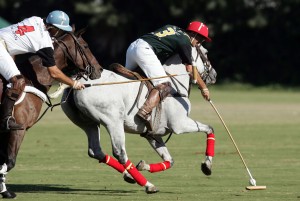
En Argentina, entre los 40 y 60´s, el juego de polo era por sobre todo rústico, fuerte y poco profesional. Durante estas décadas, el juego se llamo “Polo de Estancia”. De hecho, para estos años los caballos de polo eran simultáneamente utilizados en la estancia para trabajar la tierra. Su fisionomía era similar a la de un caballo criollo: fuerte, robusto y con poca resistencia y poca velocidad.
Esta rusticidad en el juego, se abandonó para las décadas del 70 y 80 cuando comenzó a aumentar el profesionalismo y la competencia y a predominar la velocidad como habilidad más buscada entre los caballos: es aquí cuando interviene la raza Pura Sangre. El origen de esta raza se remonta al siglo XVII con la introducción en Inglaterra de los caballos de origen árabe y berberisco. De perfil recto, piel fina, cuello largo, cruz prominente, lomo corto y dorso largo*, el Pura Sangre era una raza para carreras y deportes de velocidad y gran resistencia.
Hoy en día, todos aquellos que pertenecen al mundo del polo reconocen la importancia de otra raza: Polo argentino (en inglés, Polo Pony). El origen de esta raza nace sobre una base de caballos mestizos de campo cruzados con caballos pura sangre de carrera. Esta variación genética, sumada a la rigurosa selección y a las cualidades de la pampa húmeda, hacen que esta raza sea única en el mundo**. La necesidad de proteger y promoverla llevó a la creación, en 1984, de la Asociación Argentina de Criadores de Caballos de Polo, entidad que busca fijar y mejorar sus  características.  Tal es la relevancia que tiene en el deporte, que tanto criadores como jugadores han buscado la manera de perpetuarlas a través de las generaciones. El avance y la efectividad en la tecnología embrionaria hace que hoy en día el 40% (aprox.) de la caballada de los polistas de alto handicap haya nacido de esta forma***. A grandes rasgos, esta técnica consiste en extraer del útero de la yegua madre (“jugadora” de polo) su embrión e implantarlo en otra hembra, de manera de preservar las características físicas y concebir descendientes de categoría valiosa sin dejar inactiva a la yegua madre***.
La evolución en el tipo de juego determina definitivamente las características físicas y temperamentales que los caballos deben tener para poder adaptarse a él. En el caso de los caballos de polo, y a diferencia del resto, cabe destacar que son resistentes y veloces tanto por sus condiciones heredadas como por el entrenamiento que reciben a partir de su primer año de vida. De hecho es tal la dedicación y la confianza con la cual el jugador se relaciona con su caballo que, inexorablemente, conlleva a una relación de amistad entre ambos que trasciende cualquier partido de polo.

*Fuente: http://www.siia.gov.ar  // **Fuente: http://www.poloargentino.com // *** http://www.polomag.com.ar/transf%20emb.htm

CaballoPoloArgentino

Through out the years, polo horses have been adapted and trained to fit the needs and dynamics of the game itself. In Argentina, between the 40′s and the 60′s, the game of polo was overall rustic, tough and poorly professional.
The game was called “Polo de estancia”- “Ranch polo”. In fact, around these years polo horses were simultaneously used to work in the agro fields. The physiognomy was that of a Creole horse: strong, sturdy, with little resistance and no speed.
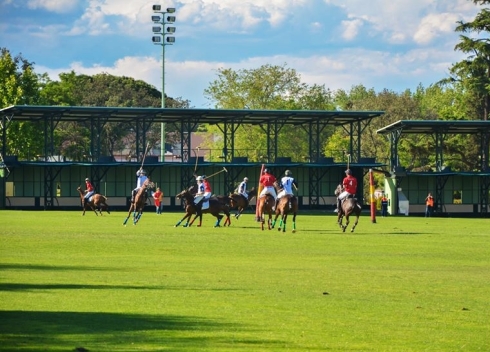
This rusticity was abandoned around the decades of the 70′s and the 80′s when professionalism and competition raised and speed started to gain predominance as horses’ most valuable ability. This is when the “Pura sangre” (pure-blood) breed intervenes. The origin of this breed could be traced back to the XVII century with the introduction of Arab and Berbers horses in England. With a straight profile, thin skin, long neck, prominent withers, short back and large loin*, the “Pura sangre” is a breed meant for racing and sports characterized by speed and high resistance.
Nowadays, everyone belonging to the polo world recognizes the importance of another breed: the Polo Pony (also known as Polo argentino). The origin of this race was born from half-blood field horses breed with pure-blood horses meant for racing. This genetic variation, added to the rigorous selection and the specific qualities of the Pampa region, contributed to the world known uniqueness of this race**. The need to protect and promote this breed encouraged the creation, in 1984, of The Argentine Association of Polo Pony Breeders (Asociación Argentina de Criadores de Caballos de Polo).  Such is the relevance of this breed to the sport, that both breeders and players have sought a way to perpetuate it throughout generations. The advance and effectiveness of embryonic technology allowed that nowadays 40% of high handicap polo horses were born through this method***.  Broadly speaking, this technique consists in extracting the embryo from the mother mare (polo “player”) uterus and implanting it to another female horse in order to preserve the physical characteristics of the mother mare without leaving it inactive while conceiving descendants of valuable category***.
The evolution of the game certainly determines the physical and mood characteristics that horses should have in order to adapt to polo sport. In the case of polo horses, contrary to the rest, it is worth noting they are resistant and fast thanks to the inherited conditions as to the training they receive during their first year of life. In fact, such is the dedication and trust in the relationship between the player and his horse that inexorably leads to a friendship between them that exceeds any polo match.

*Source: http://www.siia.gov.ar  // **Source: http://www.poloargentino.com //  *** http://www.polomag.com.ar/transf%20emb.htm

Nature Crops junto a Argentina Polo Day / Nature Crops and Argentina Polo Day together

19 dic

Un año más, Nature Crops acompañó las actividades organizadas por el equipo de Argentina Polo Day, en un escenario único. A sólo 45 minutos de la Ciudad Autónoma de Buenos Aires se encuentra El Camino, un lugar dónde pasar una divertida jornada aprendiendo a jugar unos de los deportes más reconocidos de nuestro país: el polo. Junto con un grupo de profesionales, los participantes se familiarizaran con los secretos de este deporte además de compartir un delicioso asado.

NatureCrops1bis

Para ello, y para completar éste día especial, nada mejor que una rica barra de Quinoa Orgánica NatureCrops para recuperar energías y seguir disfrutando del campo y de las clases de polo que se ofrecen a todos los visitantes de cualquier  nivel.

Para conocer más sobre Nature Crops, ingresá a  http://blog.naturecrops.com.ar/

NatureCrops2bis

Once again, Nature Crops accompained the activities organized by the team of Argentina Polo Day, in a unique setting. Just 45 minutes away of the City of Buenos Aires you will fin El Camino, the perfect place to spend a funny learning how to play one of the most recognized sports of our country: polo. Together with a group of professionals, visitors will become familiar with the secrets of the sport while sharing the typical argentine meal: the asado.  

But to complete this special day, nothing better than a delicious organic quinoa snack of Nature Crops to recover energy and keep on enjoying the polo classes that are offered to visitors of all levels.

 To know more about Nature Crops, click http://blog.naturecrops.com.ar/

Seguir

Recibe cada nueva publicación en tu buzón de correo electrónico.

%d bloggers like this: